Funny Liberal Sucking Their Thumb in a Safe Place
by Jack Halberstam
I was watching Monty Python's The Life of Brian from 1979 recently, a hilarious rewriting of the life and expiry of Christ, and I realized how outrageous most of the jokes from the film would seem today. In fact, the moving-picture show, with its religious satire and scenes of Christ and the thieves singing on the cantankerous, would never make it into cinemas now. The Life of Brian was certainly received equally controversial in its own day simply when censors tried to repress the movie in several unlike countries, The Monty Python coiffure used their florid sense of sense of humour to their advantage. So, when the film was banned in a few places, they gave it a tagline of: "So funny it was banned in Norway!"
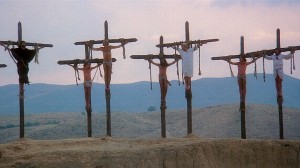
Humor, in fact, in general, depends upon the unexpected ("No one expects the Castilian Inquisition!"); repetition to the signal of hilarity "you can have eggs, bacon and spam; spam, eggs, spam and sausage; or spam, spam, spam and spam!"); silliness, non-sequitors, caricature and an anarchic alloy of the serious and the satirical. And, sense of humor is something that feminists in particular, merely radical politics in general, are accused of defective. Contempo controversies within queer communities around language, slang, satirical or ironic representation and perceptions of harm or offensive accept created much controversy with very little humor recently, leading to demands for bans, censorship and proper name changes.
 Debates amid people who share utopian goals, in fact, are nothing new. I recollect coming out in the 1970s and 1980s into a world of cultural feminism and lesbian separatism. Hardly an event would become past back then without someone feeling violated, injure, traumatized by someone's poorly phrased question, some other person's bad discussion option or even just the hint of perfume in the room. People with various kinds of fatigue, hands activated allergies, poorly managed trauma were constantly holding up proceedings to shout in loud voices almost how bad they felt because someone had said, smoked, or sprayed something near them that had fouled upwardly their animate room. Others made adjustments, curbed their employ of deodorant, tried to avert patriarchal language, idea before they spoke, held each other, cried, moped, and ultimately disintegrated into a messy, unappealing morass of weepy, hypo-allergic, psychosomatic, anti-sex activity, anti-fun, anti-porn, pro-drama, pro-processing postal service-political subjects.
Political times modify and as the 1980s gave fashion to the 1990s, equally weepy white lady feminism gave way to reveal a multi-racial, poststructuralist, intersectional feminism of much longer provenance, people began to laugh, loosened upwardly, people got over themselves and began to talk and recognize that the enemy was not amongst us but embedded inside new, rapacious economic systems. Needless to say, for women of color feminisms, the stakes take always been higher and identity politics always have played out differently. Just, in the 1990s, books on neoliberalism, postmodernism, gender performativity and racial capital turned the focus away from the wounded self and we found our enemies and, as nosotros spoke out and observed that neoliberal forms of capitalism were covering over economic exploitation with language of freedom and liberation, information technology seemed as if we had given upwardly wounded selves for new formulations of multitudes, collectivities, collaborations, and projects less centered upon individuals and their woes. Of class, I am flattening out all kinds of historical and cultural variations inside multiple histories of feminism, queerness and social movements. But I am willing to do so in society to make a point hither nearly the re-emergence of a rhetoric of harm and trauma that casts all social difference in terms of injure feelings and that divides up politically allied subjects into hierarchies of woundedness.
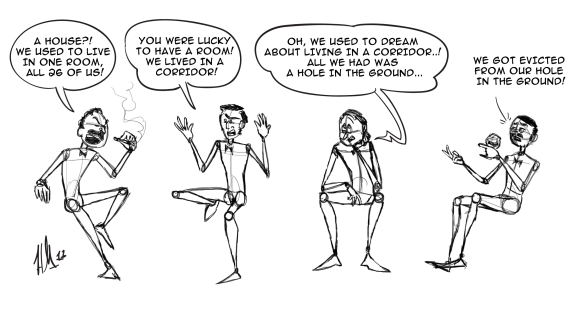
At this indicate, nosotros should recall the "4 Yorkshire men" skit from Monty Python where the iv old friends reminisce well-nigh their deprived childhoods – one says "nosotros used to live in a tiny old tumbledown house…" the next counters with "firm!? You were lucky to live in a house. We used to alive in a room…" And the 3rd jumps in with: "room? Yous were lucky to accept a room, we used to have to live in a corridor." The fourth now completes the cycle: "A corridor! We dreamed of living in a corridor!" These hardship competitions, only without the humor, are prepare pieces amid the triggered generation and indeed, I rarely become to a conference, festival or gathering anymore without a protest erupting nearly a mode of representation that triggered someone somewhere. And equally people "phone call each other out" to a chorus of finger snapping, we seem to be apace losing all sense of perspective and instead of building alliances, we are dismantling difficult fought for coalitions.
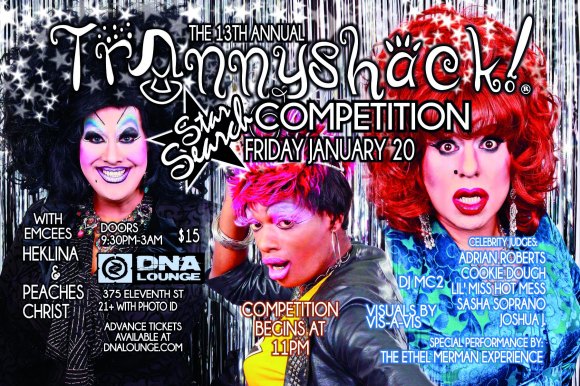
Much of the recent discourse of offense and harm has focused on language, slang and naming. For instance, controversies erupted in the last few months over the name of a longstanding nightclub in San Francisco: "Trannyshack," and arguments ensued about whether the word "tranny" should always be used. These debates led some people to lark, and legendary queer performer, Justin Vivian Bail, posted an open up alphabetic character on her Facebook page telling readers and fans in no uncertain terms that she is "angered past this trifling bullshit." Bond reminded readers that many people are "delighted to exist trannies" and not delighted to exist shamed into silence by the "word law." Bond and others have likewise referred to the queer custom of re-appropriating terms of abuse and turning them into affectionate terms of endearment. When we obliterate terms like "tranny" in the quest for respectability and absorption, we really feed dorsum into the very ideologies that produce the man and trans phobia in the get-go place! In The Life of Brian, Brian finally refuses to participate in the anti-Semitism that causes his mother to phone call him a "roman." In a brave "coming out" voice communication, he says: "I'm not a roman mum, I'm a kike, a yid, a heebie, a hook-nose, I'k kosher mum, I'one thousand a Ruddy Sea pedestrian, and proud of it!
And at present for something completely different…The controversy well-nigh the term "tranny" is non a atypical occurrence; such tussles accept become a rather predictable and regular part of all kinds of conferences and meetings. Indeed, it is becoming hard to speak, to perform, to offer upwardly piece of work nowadays without someone, somewhere claiming to feel hurt, or re-traumatized by a cultural event, a painting, a play, a speech, a casual utilize of slang, a characterization, a caricature and and so on whether or not the "dissentious" speech/characterization occurs within a complex aesthetic work. At one conference, a play that foregrounded the mutilation of the female person body in the 17th century was bandage as trans-phobic and became the occasion for multiple public meetings to discuss the damage it wreaked upon trans people present at the operation. Another slice at this performance conference that featured a "fortune teller" character was accused of orientalist stereotyping. At another upshot I attended that focused on queer masculinities, the organizers were accused of marginalizing queer femininities. And a class I was education recently featured a young person who reported feeling worried virtually potentially "triggering" a transgender student by using incorrect pronouns in relation to a third student who did not seem bothered past it! Another student told me recently that she had been "triggered" in a form on colonialism past the showing of The Boxing of Algiers. In many of these cases offended groups need apologies, and promises are made that future enactments of this or that theater piece will cut out the offensive parts; or, as in the case of "Trannyshack," the name of the club was inverse.

As reductive as such responses to aesthetic and academic material take become, then have definitions of trauma been over-simplified within these contexts. There are complex discourses on trauma readily bachelor as a consequence of decades of piece of work on memory, political violence and abuse. This work has offered u.s. multiple theories of the ways in which a charged retention of pain, corruption, torture or imprisonment tin be reignited by situations or associations that cause long buried memories to flood back into the body with unpredictable results. But all of this work, by Shoshana Felman Macarena Gomez-Barris, Saidiya Hartman, Cathy Caruth, Ann Cvetkovich, Marianne Hirsch and others, has been pushed aside in the recent wave of the politics of the aggrieved.
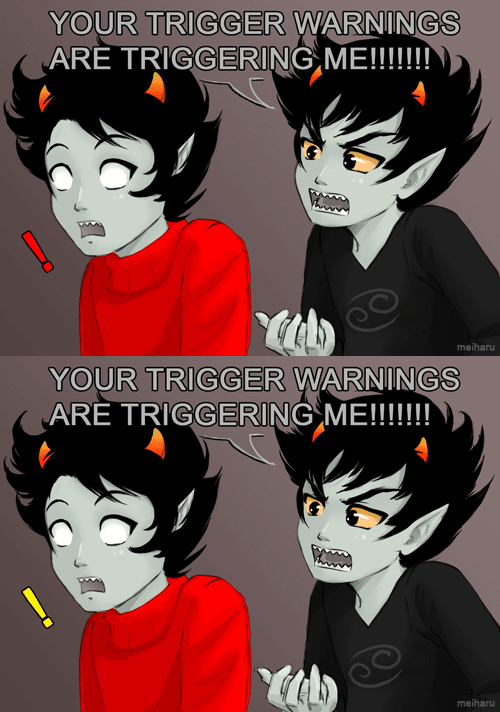
Claims virtually beingness triggered work off literalist notions of emotional pain and cast traumatic events every bit barely buried hurt that can easily resurface in relation to any kind of representation or association that resembles or even merely represents the theme of the original painful feel. And so, while in the past, nosotros turned to Freud's mystic writing pad to recollect of memory as a palimpsest, burying material nether layers of inscription, now we see a memory as a live wire sitting in the psyche waiting for a spark. Where once we saw traumatic call up as a set of enigmatic symptoms moving through the body, at present people reduce the resurfacing of a painful memory to the catch all term of "trigger," imagining that emotional hurting is somehow like to a pulled muscle –equally something that hurts whenever it is deployed, and as an injury that requires protection.
 Fifteen to twenty years ago, books like Wendy Brown's States of Injury (1995) and Anna Cheng's The Melancholy of Race: Psychoanalysis, Assimilation and Hidden Grief (2001) asked readers to remember about how grievances become grief, how politics comes to demand injury and how a neoliberal rhetoric of individual pain obscures the violent sources of social inequity. But, newer generations of queers seem only to have heard part of this story and instead of recognizing that neoliberalism precisely goes to piece of work by psychologizing political difference, individualizing structural exclusions and mystifying political change, some contempo activists seem to have equated social activism with descriptive statements about individual impairment and psychic pain. Permit me be clear – saying that you feel harmed by some other queer person's use of a reclaimed give-and-take like tranny and organizing against the apply of that discussion is NOT social activism. It is censorship.
In a post-affirmative action club, where even contempo histories of political violence like slavery and lynching are cast every bit a afar and irrelevant past, all claims to hardship have been bandage as equal; and some students, accepted to trotting out stories of painful events in their childhoods (expressionless pets/parrots, a bad injury in sports) in higher applications and other such venues, have come up to think of themselves as communities of naked, shivering, quaking little selves – too vulnerable to take a joke, also damaged to make one. In queer communities, some people are at present committed to an "Information technology Gets Ameliorate" version of consciousness-raising within which suicidal, depressed and bullied immature gays and lesbians struggle similar emperor penguins in a blighted arctic mural to get in through the winter of childhood. With the aid of friendly adults, therapy, queer youth groups and national campaigns, these same youth internalize narratives of damage that they themselves may or may not take really experienced. Queer youth groups in particular install a narrative of trauma and encourage LGBT youth to see themselves as "endangered" and "precarious" whether or not they actually feel that way, whether or not coming out as LGB or T actually resulted in abuse! Then, once they "age out" of their youth groups, those same LGBT youth get hypersensitive to all signs and evidence of the abuse nearly which they accept learned.

What does it mean when younger people who are benefitting from several generations at present of queer social activism past people in their 40s and 50s (who in their childhoods had no recourse to anti-bullying campaigns or social services or multiple representations of other queer people building lives) feel abused, traumatized, abandoned, misrecognized, beaten, bashed and damaged? These younger folks, with their gay-straight alliances, their supportive parents and their new right to ally regularly consequence calls for "condom space." Even so, as Christina
Hanhardt's Lambda Literary award winning book, Safety Space: Neighborhood History and the Politics of Violence, shows, the safe space calendar has worked in tandem with urban initiatives to increment the policing of poor neighborhoods and the gentrification of others. Safe Space: Gay Neighborhood History and the Politics of Violence traces the development of LGBT politics in the US from 1965-2005 and explains how LGBT activism was transformed from a multi-racial coalitional grassroots motility with strong ties to anti-poverty groups and anti-racism organizations to a mainstream, anti-violence motility with aspirations for state recognition.
And, every bit LGBT communities make "prophylactic" into a top priority (and that during an era of militaristic investment in security regimes) and ground their quest for condom in competitive narratives most trauma, the fight against aggressive new forms of exploitation, global capitalism and corrupt political systems falls past the way side.
Is this the manner the world ends? When groups that share mutual cause, utopian dreams and a joined mission find fault with each other instead of trigger-happy downward the banks and the bankers, the politicians and the parliaments, the university presidents and the CEOs? Instead of realizing, as Moten and Hearny put it in The Undercommons, that "we owe each other everything," nosotros enact punishments on one another and stalk away from projects that should unite united states of america, and huddle in modest groups feeling erotically bonded through our self-righteousness.
I desire to telephone call for a time of accountability and specificity: not all LGBT youth are suicidal, not all LGBT people are subject to violence and bullying, and indeed grade and race remain much more vital factors in accounting for vulnerability to violence, police brutality, social baiting and reduced access to teaching and career opportunities. Let'south call an end to the finger snapping moralism, let's question gimmicky desires for immediately consumable messages of progress, development and access; allow's all take a hard long look at the privileges that often prop upwardly public performances of grief and outrage; let's acknowledge that being queer no longer automatically means being brutalized and let's argue for much more situated claims to marginalization, trauma and violence. Let'southward not fiddle while Rome (or Paris) burns, trigger while the water rises, weep while trash piles upwards; let's recognize these internal wars for the lark they accept go. Once upon a time, the appellation "queer" named an opposition to identity politics, a commitment to coalition, a vision of alternative worlds. Now it has become a weak umbrella term for a confederation of identitarian concerns. It is time to move on, to misfile the enemy, to go illegible, invisible, anonymous (see Preciado's Bully Bloggers mail on anonymity in relation to the Zapatistas). In the words of José Muñoz, "we have never been queer." In the words of a groovy knight from Monty Python and the Holy Grail, "nosotros are now no longer the Knights who say Ni, we are now the Knights who say "Ekki-ekki-ekki-ekki-PTANG. Zoom-Boing, z'nourrwringmm."

Source: https://bullybloggers.wordpress.com/2014/07/05/you-are-triggering-me-the-neo-liberal-rhetoric-of-harm-danger-and-trauma/
0 Response to "Funny Liberal Sucking Their Thumb in a Safe Place"
Post a Comment